“Antro” is the debut album by Massimiliano Di Carlo, a trumpeter, singer, and multi-instrumentalist. In Antro, we see the artistic development of a journey spanning 15 years of study and experimentation by the artist. The album is influenced by the literary works of Giorgio Colli, Allain Danielou, and Ernesto de Martino. In particular, the cultural bridges between East and West, as well as the myth of the Antro Sibillino—an archetypal place of metamorphosis still resonating in the popular imagination of central and southern Italy—are the central elements that inspired the compositions.
The artist synthesizes his entire journey, from 2005 (the year he graduated in trumpet from the conservatory) to the present, in the tracks of this album: from classical music experience to the search for jazz and free improvisation, the study of Dhrupad singing and overtone singing, and a long and profound ethnomusicological field study conducted in the central-southern Apennines, particularly in the places of his childhood. Through his interactions with the elderly and active participation in the traditional rituals of festivals, he absorbed the vocal and instrumental heritage that is now an integral part of his artistic language. Popular poetry sung in hendecasyllables with melismatic and microtonal flows is a central aspect of this language. Together with Gioele Pagliaccia and Reda Zine, he creates visionary timbral blends and flows of improvisation, where rhythms and modal codes draw from the oral tradition of the Apennines, jazz, urban rhythms, and Gnawa music. Antro is the mythical place of transformation, the Greek/Italic mythological legacy that permeates the central-southern Apennines. In this album, it is brought to light through a new way of developing improvisation, composition, and the conception of sound.
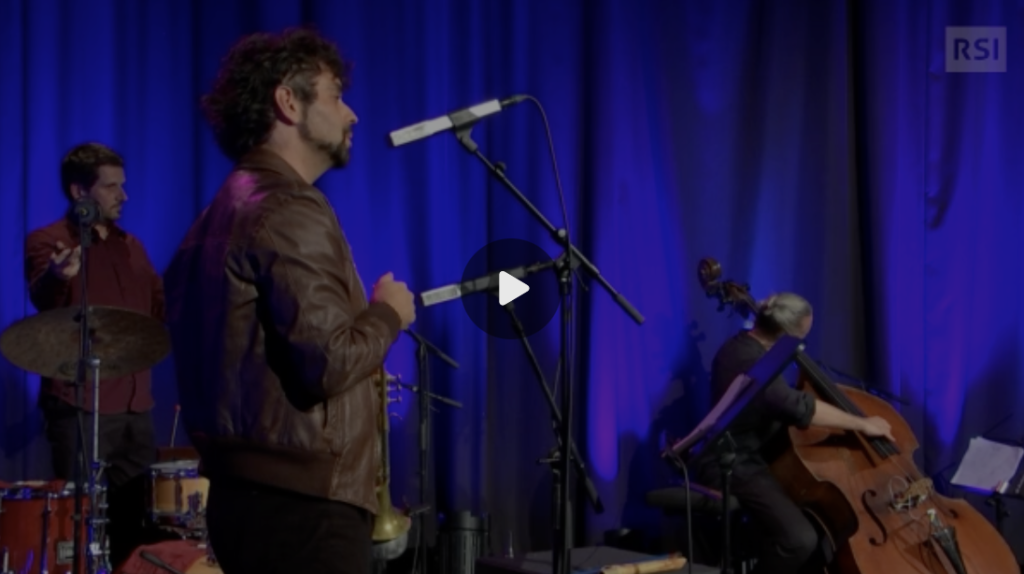
RSI – Within Massimiliano Di Carlo’s Antro
Antro is the first solo album by Massimiliano Di Carlo — trumpeter, singer, multi-instrumentalist, and vocal researcher — released on April 25, 2025. Recorded at Spectrum Studio in Bologna (mixed by Roberto Passuti, mastered by Francesco Brini), the album features nine tracks where archaic orality, improvisation, experimentation, and the roots of the central-southern Apennines coexist.The title evokes the Sibyl’s Cave (Antro della Sibilla), a mythical place of visions and metamorphoses. Not by chance, Di Carlo constructs a sonic journey here that traverses memory, body, and ritual. The voice — sometimes whispered, sometimes shamanic — intertwines with agro-pastoral instruments, minimal electronics, and free jazz structures.Two tracks from the album (Maitinata and Ninna nanna) are taken from a live recording for RSI’s Rete Due, on the program “Suoni dal Sud” (Sounds from the South), where the direct listening of the audience conveyed the performative intensity and evocative power of the music.In the trio accompanying Di Carlo, Gioele Pagliaccia (drums, percussion, objects) and Marco Zanotti on double bass stand out — a versatile musician present in many border contexts between jazz and world music. Together they create a dense, visionary soundscape, where archaic echoes and contemporary openings coexist.Christian Gilardi met Di Carlo to discuss this work: a rich discussion emerged on the relationship between voice, territory, and listening. Antro is not just an album: it is an acoustic place where years of field research, vocal studies (from Indian Dhrupad to overtone singing), travels, encounters, and silences are condensed. A courageous work, to be listened to like an initiatory tale: each track is a threshold, a call.Antro has been welcomed by critics as a radical and necessary work, capable of opening new spaces in the contemporary musical imagination. An album to be listened to with closed eyes, allowing oneself to be led into the depths — where everything begins.
At the end of 2024, Massimiliano Di Carlo was a guest on RSI, the Swiss State TV, to perform live the pieces from the ANTRO project as part of the program Suoni da Sud. Here is the full live performance: